

The Innovit Genesis platform, which powers all Innovit products, provides flexible integration capabilities designed to support a wide range of customer environments, business processes, and technical requirements. Organizations can exchange data with Innovit applications using either File-Based Integrations or API-Based Integrations, depending on their operational needs and integration maturity.
File-Based Integration
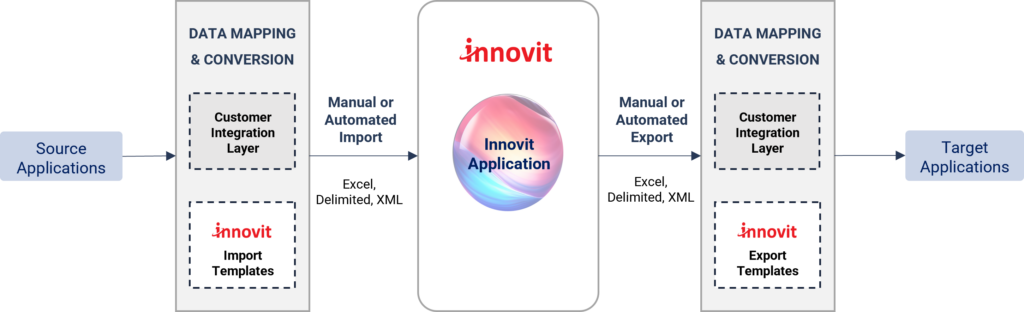
File-based integration is the current standard approach for connecting external systems with the Genesis platform. This method is ideal for organizations that require reliable, scheduled data exchanges without the complexity of real-time integration.
How It Works
Data files are securely transferred between systems using SFTP (Secure File Transfer Protocol). Genesis can both consume inbound files and generate outbound files for downstream applications.
Supported Data Formats
Genesis supports multiple file formats to accommodate various source and target systems, including:
- Microsoft Excel (.xlsx)
- Delimited files (CSV, TSV, etc.)
- XML
Typical Use Cases
- Scheduled data imports and exports
- Batch processing of large datasets
- Integration with legacy or third-party systems
- Automation through periodic synchronization processes every minute, hour, day or any other desired frequency
Considerations
- Data is exchanged on a scheduled basis rather than in real time
- Changes are reflected during the next scheduled file exchange cycle

Benefits
- Secure and reliable data transfer
- Easy to implement across heterogeneous systems
- Well-suited for high-volume batch processing
- Minimal dependency on system availability during transfer windows
API-Based Integration (Coming Soon)
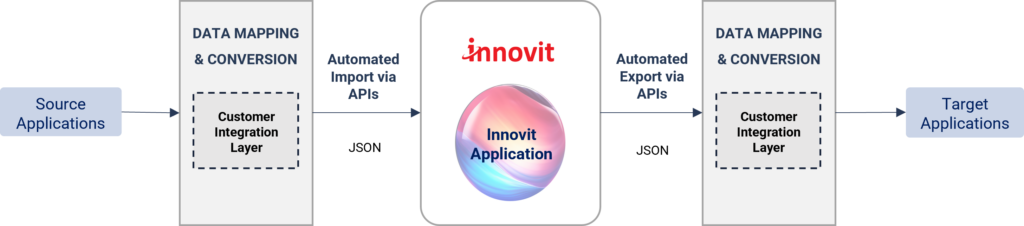
API-based integration will provide modern, real-time connectivity between Innovit and external applications. This option is designed for organizations requiring immediate data exchange and event-driven business processes.
How It Works
Systems communicate directly with Innovit applications using secure HTTPS-based web service requests. APIs will allow applications to send, retrieve, update, and synchronize data programmatically.
Supported Data Formats
API payloads will support industry-standard formats including:
- JSON
- XML
Typical Use Cases
- Real-time data synchronization
- Application-to-application integration
- Event-driven workflows
- Automated business processes
Considerations
- Network availability and API security controls are required
- Requires API development and connectivity capabilities within participating systems
Benefits
- Near real-time data exchange
- Reduced latency between connected systems
- Improved user experience through immediate updates
- Supports modern integration architectures and digital ecosystems